I thought the pissing would go away, but three days after finishing Donna Tartt's The Goldfinch, the flow has actually increased. I am ready to pull out the pages of the book, one by one, and throw them in the Clarion River. A good thing I've got a kindle, so disaster can be avoided. But this---THIS got the Pulitzer??? This is literature?
What this does is reflect perfectly what has been happening in the world of publication in the past few years. Total chaos---the basic confirmation of what a literary agent once told me at a conference. Even at the literary end of large publishing companies, they are so eager to blend in sensationalism and commercialism they come up with a mix that is not only unsavory, but total garbage. And then, politics come in. The results: they give garbage the Pulitzer.
So my humble advise to writers out there. Keep writing only if you are convinced writing is part of your heartbeat, your oxygen.
When you do, kill self-indulgence (The Godfinch is full of it) and "revise, revise, revise! "
Wednesday, October 29, 2014

Friday, April 25, 2014
BETWEEN MONSTER AND BIRTH
Rebecca by Daphne du Maurier --- my view
 If you’re afraid of going back to the classics because you like page turners, don’t be! At least not with Rebecca. I revisited the novel for pace reasons. Let me explain. I am working on a literary mystery and I was in need of some inspiration and sustenance not so much for plot as for rhythm and tension. Rebecca, the forerunner of the psychological thriller, happened to be the perfect choice. Of course, I mixed business with pleasure for the novel is, as mentioned before, vastly entertaining. Something Du Maurier wanted. With time, it acquired a lot more than commercial value and became quite an important literary work.
With its remarkable descriptions of nature—either friendly or threatening—or of Manderley, a mansion that our unnamed narrator never controls or owns, this work is, besides a damn good story, all allegory, all metaphor.
I found pleasure turning those pages, but it was a sad, depressed pleasure. Don’t be fooled by the entertaining qualities of the novel, for this is a profoundly dark work. Entering Manderley felt like entering a grave. Our unnamed narrator never quite existed. (Her descriptions relate to her absence rather than her presence.) She died before being born. She never asserted herself, letting fear and the glance of others control her. And dead Rebecca was always like the sea, renewing her ardor with each wave.
This is not an easy work. For no matter how pale or submissive the narrator seems to be, the reader roots for her. Who doesn’t have compassion for a victim? And she’s attacked on all fronts. On one side, she has to please her husband, be a dreamer, “Alice in Wonderland,” as he puts it. On the other, she is given the chance to shine, be another Rebecca. None of these choices will make her happy. Being a husband pleaser will kill her identity. Being a rebel will make her true to herself but unacceptable to society. Unless she becomes some sort of monster, like Rebecca, playing the societal game on one side and not caring about anyone on the other. In the end, we know what she chooses. We know the tragedy.
And we know why this complex work is indeed a classic.
If you’re afraid of going back to the classics because you like page turners, don’t be! At least not with Rebecca. I revisited the novel for pace reasons. Let me explain. I am working on a literary mystery and I was in need of some inspiration and sustenance not so much for plot as for rhythm and tension. Rebecca, the forerunner of the psychological thriller, happened to be the perfect choice. Of course, I mixed business with pleasure for the novel is, as mentioned before, vastly entertaining. Something Du Maurier wanted. With time, it acquired a lot more than commercial value and became quite an important literary work.With its remarkable descriptions of nature—either friendly or threatening—or of Manderley, a mansion that our unnamed narrator never controls or owns, this work is, besides a damn good story, all allegory, all metaphor.
I found pleasure turning those pages, but it was a sad, depressed pleasure. Don’t be fooled by the entertaining qualities of the novel, for this is a profoundly dark work. Entering Manderley felt like entering a grave. Our unnamed narrator never quite existed. (Her descriptions relate to her absence rather than her presence.) She died before being born. She never asserted herself, letting fear and the glance of others control her. And dead Rebecca was always like the sea, renewing her ardor with each wave.
This is not an easy work. For no matter how pale or submissive the narrator seems to be, the reader roots for her. Who doesn’t have compassion for a victim? And she’s attacked on all fronts. On one side, she has to please her husband, be a dreamer, “Alice in Wonderland,” as he puts it. On the other, she is given the chance to shine, be another Rebecca. None of these choices will make her happy. Being a husband pleaser will kill her identity. Being a rebel will make her true to herself but unacceptable to society. Unless she becomes some sort of monster, like Rebecca, playing the societal game on one side and not caring about anyone on the other. In the end, we know what she chooses. We know the tragedy.
And we know why this complex work is indeed a classic.
AESTHETES DO NOT NEED TO BE HERMIT CRABS
L'Élégance du hérisson (The Elegance of the Hedgehog) by Muriel Babery ---my view
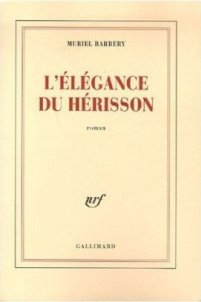
This a closed spaced —locked?— novel almost to the end, as everything happens indoors—physically and metaphorically speaking. When the door of the building is pushed at last and Paris shows its face, then it’s all over. Tragedy strikes. At least tragedy in its most manifest, albeit ordinary, form. For this is not a happy novel, although the possibility of redemption, or at least hope, appears. Destinies are retraced. What one pre-adolescent thought she understood and controlled ends up being not so controllable or understandable after all. Suicide might not be the solution. Life is not such a simple formula. What the intellect grasps, the emotions swallow and spurt out, but not very neatly. What ideas collect and put in place, art rearranges and deranges in the process.
Muriel Babery sets her philosophical novel in a Paris building for the rich and spoiled. Two rebels against the system are the voices of this novel—Renée, the concierge, and Paloma, a gifted twelve-year old who thinks life is not worth living. Their rebellion is an inner rebellion, and the building in which all this (non)action takes place can be seen not only as a metaphor for their inner life, but also for the suffocating society that surrounds them. Only books, only literature can open up such a space, reinvent such a space. Only minds like them can now enter this reinvented place. A cat will be allowed as well. And, later, a Japanese man with his new perspective on things.
Babery, in this slow paced, intellectual and poetic work, depicts two refined souls in a brutal world, two strangers with a hermit crab attitude trying desperately to protect themselves from the adventure of life. Until one shell starts to open and the other, as a consequence, has to break, so life, because of death, must be lived. This sounds cryptic. But when you read this intriguing novel, you will understand.
It is not a perfect work; there are some dead moments, although rare. Some chapters could have been removed; others, developed. Some useless characters could have been killed. Some vigor in the thought process could have been added. But Barbery still achieved something quite remarkable with this novel: in an elegant, highly accessible prose, she did manage to intrigue and stimulate both sides of the brain. High marks for that.
This a closed spaced —locked?— novel almost to the end, as everything happens indoors—physically and metaphorically speaking. When the door of the building is pushed at last and Paris shows its face, then it’s all over. Tragedy strikes. At least tragedy in its most manifest, albeit ordinary, form. For this is not a happy novel, although the possibility of redemption, or at least hope, appears. Destinies are retraced. What one pre-adolescent thought she understood and controlled ends up being not so controllable or understandable after all. Suicide might not be the solution. Life is not such a simple formula. What the intellect grasps, the emotions swallow and spurt out, but not very neatly. What ideas collect and put in place, art rearranges and deranges in the process.
Muriel Babery sets her philosophical novel in a Paris building for the rich and spoiled. Two rebels against the system are the voices of this novel—Renée, the concierge, and Paloma, a gifted twelve-year old who thinks life is not worth living. Their rebellion is an inner rebellion, and the building in which all this (non)action takes place can be seen not only as a metaphor for their inner life, but also for the suffocating society that surrounds them. Only books, only literature can open up such a space, reinvent such a space. Only minds like them can now enter this reinvented place. A cat will be allowed as well. And, later, a Japanese man with his new perspective on things.
Babery, in this slow paced, intellectual and poetic work, depicts two refined souls in a brutal world, two strangers with a hermit crab attitude trying desperately to protect themselves from the adventure of life. Until one shell starts to open and the other, as a consequence, has to break, so life, because of death, must be lived. This sounds cryptic. But when you read this intriguing novel, you will understand.
It is not a perfect work; there are some dead moments, although rare. Some chapters could have been removed; others, developed. Some useless characters could have been killed. Some vigor in the thought process could have been added. But Barbery still achieved something quite remarkable with this novel: in an elegant, highly accessible prose, she did manage to intrigue and stimulate both sides of the brain. High marks for that.
Wednesday, April 23, 2014
IS MRI A LIGHTLESS TUNNEL?
 So once upon a time (okay a couple of days ago) a person with a mild case of claustrophobia had to go through an MRI. Personnel at the hospital failed to reassure her. The MRI operator told her he couldn’t stand the thing himself without tranquilizers. So with the help of all this comforting and her own writer’s imagination, she swallowed a couple of pills before entering hell on earth, that dark, airless tunnel that would attack her from all sides. The day came, the moment. A half-spheric glass shape was placed above her head. Great. Now, she looked like a robot. A button was pushed and she glided into a tube, the tube. And then, what? It stopped and she could actually see the light at the end of the tunnel. Literally. And there was plenty of air circulating around her. She said: “That’s it? That’s what I am supposed to be afraid of? That’s why I got myself spaced out for?”
P..S. Okay, Mr MRI has some sort of temper and makes funny noises, some actually sounding like machine guns, so I would recommend MRI’s to crime fiction authors mostly, and only if they are not on vacation at the moment.
Friday, March 21, 2014
PROFESSIONAL EDITORS NOW MORE THAN EVER
In this new age of publication, where indie authors are given more attention than ever, professional editors should not be neglected. Au contraire. My review of Origins by Eric Drouant illustrates this point. Indie authors, no matter how talented, should remember that even the most successful writers are edited by pros.
I bought this book because I was intrigued by the premise, that is how the US government, with a mad man in its midst, plans to use Cassie and Ronnie, two thirteen year olds gifted with psychic abilities. The occasional spelling and punctuation typos put aside, the structure of the novel could have gained power with additional revisions. Even if this is the first of a series where Drouant needs to introduce his characters, it takes a long time for the plot to really start. Had the novel begun with a slightly reworked Chapter 6, when the kids flee their respective home, the action would have picked up immediately, and all of what the reader needed to know about the gifted kids could have been given through informative flashbacks. Instead, a good part of the first half of Origins contains dead or repetitious moments. After that, and as soon as the police and the press enter the scene, the pace changes, even the style changes. Although following the same teenagers, it almost feels like a different novel. Frankly, that second half is where the thriller part happens. That’s where a professional editor could have helped and that’s why I can only give three stars to this novel, because only half of it is good.
I bought this book because I was intrigued by the premise, that is how the US government, with a mad man in its midst, plans to use Cassie and Ronnie, two thirteen year olds gifted with psychic abilities. The occasional spelling and punctuation typos put aside, the structure of the novel could have gained power with additional revisions. Even if this is the first of a series where Drouant needs to introduce his characters, it takes a long time for the plot to really start. Had the novel begun with a slightly reworked Chapter 6, when the kids flee their respective home, the action would have picked up immediately, and all of what the reader needed to know about the gifted kids could have been given through informative flashbacks. Instead, a good part of the first half of Origins contains dead or repetitious moments. After that, and as soon as the police and the press enter the scene, the pace changes, even the style changes. Although following the same teenagers, it almost feels like a different novel. Frankly, that second half is where the thriller part happens. That’s where a professional editor could have helped and that’s why I can only give three stars to this novel, because only half of it is good.
Monday, March 10, 2014
SIMONE AT THE GATE

SISSI (aka Simone): “What’s this? Some kind of barricade?”
MOM: “A border. You need to get a passport to cross it.”
SISSI: “Oh, yeah?”
MOM: “Some part of the population cannot go through, though.”
SISSI: “Such as?”
MOM: “Terrorists. And I mean a specific type of terrorists. The ones who enjoy terrorizing cats. Creature who like chocolate. And I mean a specific type of chocolate. Cat poop, for example.”
SISSI: “Oh, damn!”
Silence.
SISSI: “There is another border on the other side.”
MOM: “Yeah.”
SISSI: “But that’s Coco’s (aka Colette) special bathroom over there!”
MOM: “You mean, what I and other people around here call the den.”
TO BE FOLLOWED....

COCO: “Well, well, well. It seems my special bathroom is not accessible to me these days. Ha! See if I care! I’ve got my own special chair and my own special fire.”
Wednesday, March 5, 2014
Writing Companion
I have a writing companion. He likes to travel on my lap when I write. At the moment, he’s perched on my arm and examining the laptop screen. His name is Beckett (yes, named after the great Sam). When he climbs on my shoulder, he likes to inspect my ears, or grab a piece of my hair and meticulously remove any sort of particle he may find there. Our internal dialogue goes approximately like this:
“Hey,” I tell him, “it’s clean.”
“Oh, yeah, how often do you wash your hair?”
“Every other day.”
“You dirtball! Do you see how often I wash mine? Like every hour or so?”
“Those are feathers, you brat! You’re a damn parrot!”
“I am cleaner than you are! I am cleaner than you are!”
“Oh, yeah? Who just pooped on my pants!”
“At least I didn’t poop in...”
“Oh, shut up!”
“Okay, I’ll just go back and clean your hair. When will you learn?”
“Hey,” I tell him, “it’s clean.”
“Oh, yeah, how often do you wash your hair?”
“Every other day.”
“You dirtball! Do you see how often I wash mine? Like every hour or so?”
“Those are feathers, you brat! You’re a damn parrot!”
“I am cleaner than you are! I am cleaner than you are!”
“Oh, yeah? Who just pooped on my pants!”
“At least I didn’t poop in...”
“Oh, shut up!”
“Okay, I’ll just go back and clean your hair. When will you learn?”
Subscribe to:
Posts (Atom)