ABANDONMENTS
Three.
Three major abandonments in my life. I reflected on that, this past Sunday at 1 p.m, as I finally sat down to get some breakfast.
3. Three. (Take your pick. The number. The feelings. The blades.)
My best friend.
My family.
My other best friend.
Not necessarily in that chronological order.
But certainly in that emotional order.
I didn't realize as a child that I was abandoned by my family. I just thought I didn't fit the mold. That's why they didn't love me the way they loved each other. It's only later, when I fell in love, when love became a frightening thing, that I realized I didn't know what love was. For years I had to grow accustomed to it. To this day, love still frightens me from time to time.
In my teenage years, I found something magical. A beautiful, profound friendship. We could remain silent for hours, watching the river run in the summer, the flames crackle and rise in the fireplace in the winter. We knew a cozy conversation existed within that silence. Our parents thought we were weird. We didn't give a damn. Our silences lingered. Until that summer. She was sixteen and it was a Sunday. I had just returned from Spain. Spanish boys had taught me how to French kiss. I was going to tell her all about it. I was going to meet her after lunch, but a car beat me to it, hitting her moped in the bright, Basque sun. Christine was sixteen. She would never grow old; she would never French kiss a boy. That summer, I learned about pleasure and death.
When I promised myself never to open my heart to another best friend, was I right? "Beware of your first movements, as they are the right ones," said Talleyrand. I had to take an antidepressant when I lost Christine. My wounded heart had locked its doors. But this new girl kept knocking with her smiles and her enthusiasm. Her sense that life could be fun. She made me see bright colors again. So little by little the doors of my heart opened up and she became my new best friend. She did prove herself worthy of the name. She and her family did everything they could to help me cross the Atlantic with the man I loved (and to whom I am still married after 37 years), despite terrible threats made by my mother.
Almost three decades went by. I kept seeing her as my best friend. So much so that I crossed the Atlantic (the other way this time) when I sensed she was too depressed to handle life on her own. That’s when things began to decay. Or, rather, that’s when the decay started to show. She first presented me to her yoga students as her "best friend," then just as "a friend." A friend who had flown to France because she was worried about "a friend." Later, she sent a birthday present to my husband but my own birthday was nearly forgotten. There was a distracted wish, no gift. For too many years, I had failed to notice that, when she called and I picked up the phone, she insisted on talking to my husband afterwards. When he picked up the phone, she was satisfied. There was no need to hear my voice.
A couple of nights ago, I dreamed of broken dishes.
I am surprised I can still stand up when all within me feels so scattered and broken at the base.
Wednesday, September 9, 2015
Tuesday, September 1, 2015
THE DONALD
When my daughter and I were on the phone today, she told me she had almost finished reading my novel, "Was Donald Chancecastle modeled after Donald Trump?" she asked.
Smart woman. When I created the pompous, noisy character, I did have The Donald in mind. I thought about changing the first name. But, considering the satiric characteristics of the novel, I kept it. For if there is some grandiloquence in "Donald," you will also find quirky comedy there as well. Think "Donald Duck."
And, to top it all, Donald Chancecastle is kinky.
Little did I know that he would come out when The Donald would make such an apparition in the news.
Of course, no one in their right mind would vote for Donald Chancecastle.
Smart woman. When I created the pompous, noisy character, I did have The Donald in mind. I thought about changing the first name. But, considering the satiric characteristics of the novel, I kept it. For if there is some grandiloquence in "Donald," you will also find quirky comedy there as well. Think "Donald Duck."
And, to top it all, Donald Chancecastle is kinky.
Little did I know that he would come out when The Donald would make such an apparition in the news.
Of course, no one in their right mind would vote for Donald Chancecastle.
Friday, August 28, 2015
ANATOMY OF A TITLE
I wrote From A to Zoe before I wrote Chainsaw Jane. Why it got out now, and not before CJ? I didn’t have a title. Or I had too many titles, take your pick. For years, I convinced myself the titling issue was the reason. Yup, for years—no kidding—I tortured my little mind with title possibilities. Made one list, then another. Threw them in the basket or forgot about them. Began a title list again. Abandoned it once more. For a long time the novel was called And So It Starts Again. After all, Zoe, the narrator, was making tabula rasa of her old life and beginning again. There was an irony in that title that I kinda liked: Zoe is convinced her new life will go smoothly, with no single bump on the road. And guess what? She falls on her ass at every turn.
I tried that title on people. No reaction.
At one point I considered No Mozzarella for Me. The title stood on the manuscript first page for longer than a few minutes. Months went by and it was still there. Was that the one? Once you read the novel, you will understand why this cheesy option was a serious candidate. There is a rat there who will only eat Swiss cheese. The only way he will bite into mozzarella is when he realizes the other alternative is starvation. And of course, the title also suggested that Zoe wanted a more flavorful bite of life—that life should be relished.
I tried that title on people. No reaction.
Some members in my writing group thought that just Zoe would be plenty of title. Zoe, after all, means life. Zoe and zoo have the same origin, and in this novel, animals actually play a major role. And the Brooklyn Zoo does play a role as well. I liked the concept. Still, I felt it was missing something. But what, exactly?
To an author, the choice of a title is a way to direct the reader toward her way of thinking. It is, from the very beginning, an invitation into her world. She’s getting her house ready for the guests. The title is the central bouquet at the banquet table. Without imposing a way of thinking to the reader (without imposing a topic of conversation to the guest), the author is setting a tone.
Well, I didn’t have my tone set, I didn’t have my bouquet, I didn’t have my title, dammit!
So I went back to cogitating on Zoe. I knew the central theme, of course. But I also knew it was a tragicomedy narrated by a sassy yet vulnerable woman; someone who fell, nearly collapsed, but found somewhere some indomitable courage to get up once more. Someone who used bite, humor, satire as surviving tools. I never had much trouble with a title before. With Chainsaw Jane, the reverse happened. I had a title; I needed to find a story to go with it.
Finally, I had a couple of serious contenders. That was during one of my trips to Denver, when I visited my daughter. One of them was From A to Zoe. This one seemed to be appealing to other people besides myself, including my daughters’s husband (at the time her fiancé).
Finally, a reaction, and a positive one at that.
Finally, the banquet’s bouquet.
Soon after, I was ready to let From A to Zoe go, meet the world. I kept asking myself why it took so long. But then it struck me and it struck me harder than before: Zoe is the story of a woman who starts all over again.
This past summer, I put my house for sale. I will sell all my furniture, take my husband and my pets with me, and leave. I will start all over again. Learn the basics again.
And, I suspect, fall on my ass again. But like Zoe, I’ve got expertise in that field as well.
Whoever started saying there was no coincidence might have been on to something.
http://www.amazon.com/Zoe-Novel-Marie-Jo-Fortis-ebook/dp/B012UQUWXQ
Wednesday, February 4, 2015
Yeah, yeah, it has been a while.
I finished writing my novel About Emily. I went through a couple of revisions, gave it to read to Pierre as well. I am very proud of this work, even if it is quite different from what I have done recently. It does not insist on humor, satire, and there is very little levity anywhere there. The plot came to me in a dream. All I had to do was write it.
All I had to do. Give my soul to it. Sell my soul. That's how it felt like, basically. For when I completed Emily, I felt drained inside.
Drained, and proud.
But I feel proud at the completion of every novel I write. Every time, I feel this is the best writing I have ever done. Emily is no exception. The only difference is that, unlike Chainsaw Jane and From A to Zoe (which I am going to put on the market shortly, hopefully), this is literary work, not the type of writing that will attract the masses. Prose, style, inner wanderings are more important than action here. Paris is as much a character as, well, characters.
At the same time, I fear disappointment. Is it as good as I think it is? How can I know? Sales? Sales do sometimes---but not necessarily---indicate the quality of a work. If I keep being an independent author, I will need luck on my side, as I can put so much money on marketing. But I am getting ahead of myself. The book is not ready for publication. It's just a newborn.
Time. Time will let me know, independent of sales. Once I get detached from all the efforts placed into Emily, and once I get back to reading it again with my left brain---all blades of my critical mind sharpened---I will know.
Meanwhile, there is that feeling of delivering a newborn. It's exhilarating, exhausting, and for a while you don't know where your mind is. And yet you don't want to go anywhere else.
I finished writing my novel About Emily. I went through a couple of revisions, gave it to read to Pierre as well. I am very proud of this work, even if it is quite different from what I have done recently. It does not insist on humor, satire, and there is very little levity anywhere there. The plot came to me in a dream. All I had to do was write it.
All I had to do. Give my soul to it. Sell my soul. That's how it felt like, basically. For when I completed Emily, I felt drained inside.
Drained, and proud.
But I feel proud at the completion of every novel I write. Every time, I feel this is the best writing I have ever done. Emily is no exception. The only difference is that, unlike Chainsaw Jane and From A to Zoe (which I am going to put on the market shortly, hopefully), this is literary work, not the type of writing that will attract the masses. Prose, style, inner wanderings are more important than action here. Paris is as much a character as, well, characters.
At the same time, I fear disappointment. Is it as good as I think it is? How can I know? Sales? Sales do sometimes---but not necessarily---indicate the quality of a work. If I keep being an independent author, I will need luck on my side, as I can put so much money on marketing. But I am getting ahead of myself. The book is not ready for publication. It's just a newborn.
Time. Time will let me know, independent of sales. Once I get detached from all the efforts placed into Emily, and once I get back to reading it again with my left brain---all blades of my critical mind sharpened---I will know.
Meanwhile, there is that feeling of delivering a newborn. It's exhilarating, exhausting, and for a while you don't know where your mind is. And yet you don't want to go anywhere else.
Tuesday, December 9, 2014
SOMETIMES, HUSBANDS SHOULD LISTEN TO THEIR WIVES, I'M JUST SAYIN'
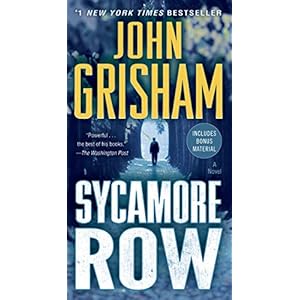
Grisham is back! Really? That’s what I wanted to believe as well. At first, Sycamore Row is full of atmosphere: the southern little town, the colorful waitress, the flavorful dialogues. So I am happy to find Grisham again, and with a humor bonus on top of that, at least at first. Not that he is humorless in other works, but here the rural settings seem to stimulate his wit and sass, despite the morbid start of the novel and its important topic. We are in the 1980's, in a Mississippi little town where the sheriff and one of the judges tend to stretch the law one way or the other, and where racism has far from disappeared. Readers who know Grisham well have visited the place already, and met most characters in A Time to Kill, Grisham’s first novel. Here, a black woman is about to inherit millions from a white man at the expense of his family. Some issues arise from this. The duty to one’s family is one. A significant anti-racist statement is another. You could add this: the freedom to do what one wants with one’s own fortune. What is more important in life—the personal or the civic? What if the personal and the historic were one and the same?
All these problems are posed, somewhat addressed, never really explored.
Too bad. Sycamore Row could have been fascinating, the stuff of great literature, with such a title, too! But if it is gripping in the beginning and interesting in the end, what it is in the middle is too much like small towns and not enough like good writing: so dull and soporific that you want to get drunk with Lucien—the alcoholic and debarred lawyer of the novel.
At the end of each one of his novels, Grisham usually addresses his readers, evoking the epopee of the writing of that particular book. Here, he tells us that his wife Renée, “was not too keen on a sequel” of A Time to Kill, which many readers consider his masterpiece.
Renée, I believe you were right.
Wednesday, October 29, 2014
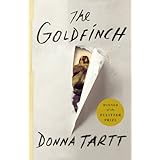
SO PISSED, PART 2--- THE GOLDFINCH by Donna Tartt-- MY REVIEW
And, actually, this novel is pretty much like a box of chocolates. You begin with the few good ones and then...
When I picked up the work and was informed that Donna Tartt spent ten years writing it, I imagined a Flaubertian author seeking “le mot juste.” And if there are moments when the work clicks, when psychological tension happens, when dream/nightmare and reality blend, there is also that moment when I wonder if the ten-year-writing story is not some publicity stunt. Some brainwashing, as some of the writing here is totally loose, adolescent and careless. My suspicions arise somewhat at the museum scene, when all collapses, including Tartt’s prose which drags on and on and on...And on...
But it begins so well! Is that howTartt got the Pulitzer—on the first 50 pages of reading? It is undeniable that she’s a capable writer. But at some point, something happened. She either went into some kind of depression or into some substance dependency. To the point where you stop caring for the narrator, for he ends up deconstructing himself, becoming (un-becoming) a character with no character.
As for the characters that truly deserve care and attention, Tartt turns her back to them. Say, Andy, Theo’s genius little friend who seems as emotionally estranged from his own family as he is from his own emotions; Andy is such an intriguing character. What does Tartt do? Without revealing the plot, I’ll just say that she does next to nothing with that. There are points of reference here and there, and now and then, but these are but tiny grains of sugar in very troubled water. And why does she insist on Boris, a horrible, incoherent character, more animal than human, more rat than dog in his invasiveness? I honestly detest this personage, who manages to be at once ugly, boring, confusing, and cliched. The only way I would like him is if he were sculpted by pastry chefs on the Halloween Wars show on the Cooking Channel.
Are there interesting characters? Mrs Barbour is one of the better ones. Mom could have been fabulous, but is not there long enough. Hobbie and Pippa are just fairy tale decorations. Had Tatt concentrated her efforts on Andy, Mom, Mrs Barbour and done something with Hobbie, she might have deserved that Pulitzer. Instead, she makes us spend time with the wrong people. Instead, she adds others—bim, bam, boom!— who pop out like mushrooms—fungus—after a two-week rain. Instead, she lets her verbal self indulgence get the better of herself. (Again, where was the editor? Snoring in a corner?) As for the flooding, pseudo-philosophical verbosity of the end, it is a total, total disaster.
In the end, The Goldfinch relentlessly kills what it could have been. It’s a novel that tries to keep going despite the fact that soon in the plot it slices its own veins.
SO PISSED!
I thought the pissing would go away, but three days after finishing Donna Tartt's The Goldfinch, the flow has actually increased. I am ready to pull out the pages of the book, one by one, and throw them in the Clarion River. A good thing I've got a kindle, so disaster can be avoided. But this---THIS got the Pulitzer??? This is literature?
What this does is reflect perfectly what has been happening in the world of publication in the past few years. Total chaos---the basic confirmation of what a literary agent once told me at a conference. Even at the literary end of large publishing companies, they are so eager to blend in sensationalism and commercialism they come up with a mix that is not only unsavory, but total garbage. And then, politics come in. The results: they give garbage the Pulitzer.
So my humble advise to writers out there. Keep writing only if you are convinced writing is part of your heartbeat, your oxygen.
When you do, kill self-indulgence (The Godfinch is full of it) and "revise, revise, revise! "
What this does is reflect perfectly what has been happening in the world of publication in the past few years. Total chaos---the basic confirmation of what a literary agent once told me at a conference. Even at the literary end of large publishing companies, they are so eager to blend in sensationalism and commercialism they come up with a mix that is not only unsavory, but total garbage. And then, politics come in. The results: they give garbage the Pulitzer.
So my humble advise to writers out there. Keep writing only if you are convinced writing is part of your heartbeat, your oxygen.
When you do, kill self-indulgence (The Godfinch is full of it) and "revise, revise, revise! "
Subscribe to:
Posts (Atom)